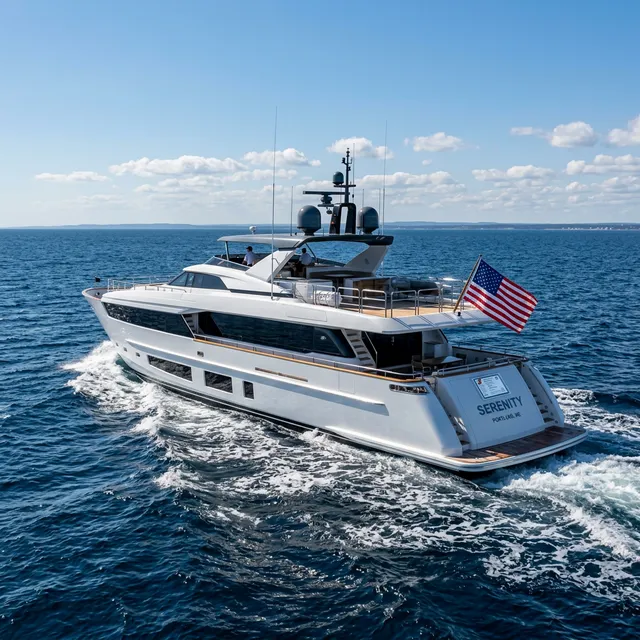
What USCG Vessel Documentation Does
USCG vessel documentation is a federal system administered by the United States Coast Guard National Vessel Documentation Center (NVDC). A Certificate of Documentation (COD) serves as evidence of vessel nationality and records ownership-related information in the federal documentation system.
This system predates state boat registration by over a century. Originally established to facilitate international trade and admiralty law, documentation is available only when the vessel and owner meet NVDC eligibility rules, including net tonnage, ownership, citizenship, and endorsement requirements. The five-net-ton threshold is roughly equivalent to many boats 25 feet or longer, but it is not the only test. While state registration is required for most recreational boaters, USCG documentation can be an alternative or supplement in specific situations.
It is important to understand that USCG documentation and state registration are not interchangeable in all cases. Documented vessels generally do not display state bow numbers, but states may still require a registration record, validation decal, tax filing, or other local compliance step. The distinction between the two systems is a frequent source of confusion among boat owners.
When Is USCG Documentation Required?
Federal documentation can be mandatory for eligible US-flag vessels of five net tons or greater that engage in coastwise trade, fisheries, or other documented trade endorsements. This can include charter boats, fishing vessels selling catch commercially, coastal tour operators, and vessels transporting goods or passengers between US ports for compensation. Check NVDC endorsement and citizenship instructions before assuming a commercial use qualifies.
For recreational boaters, documentation is entirely voluntary. However, many boat owners choose to document their vessels because of the legal protections and practical benefits it provides, particularly for larger boats or those used in international waters.
When Documentation Is Voluntary but Beneficial
Recreational vessels that meet NVDC vessel and ownership eligibility rules may qualify for voluntary documentation. Owners of sailboats and powerboats typically 25 feet and longer often find documentation useful in several scenarios: if the vessel travels to foreign ports, if financing requires a Preferred Ship Mortgage, if the owner wants a federal documentation record, or if the owner simply prefers a cleaner bow without state registration numbers where state rules allow it.
How to Apply for USCG Documentation
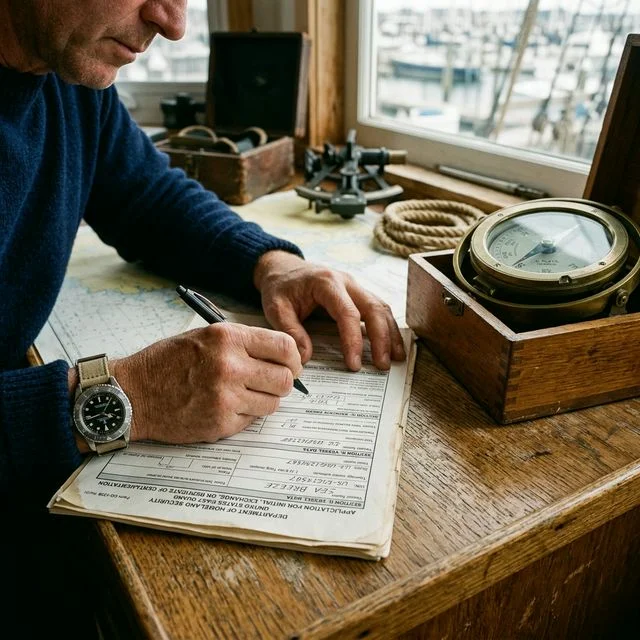
The application process is handled through the National Vessel Documentation Center (NVDC). Private documentation companies may help prepare paperwork, but they are separate commercial services and are not a substitute for checking NVDC instructions and fees.
First, determine your vessel's eligibility. The vessel must be owned by a US citizen and must measure at least five net tons. Most boats 25 feet and longer meet the net tonnage threshold. Second, select a vessel name. Unlike state registration numbers, documented vessels display a hailing port and vessel name on the stern rather than registration numbers on the bow. The vessel name must be distinguishable from other documented vessels.
Third, complete the appropriate application form (CG-1258). This form requires vessel specifications, ownership information, and details about the intended use (recreational, coastwise, fishery, or registry). Fourth, submit documentation proving ownership, such as a builder's certification, bill of sale chain, or existing marine title.
Follow the current NVDC application instructions before filing. Missing ownership-chain evidence, citizenship information, signatures, or payment can delay the case. Processing time changes with NVDC workload, so check NVDC's current processing status rather than relying on a fixed delivery window.
Fees for USCG Documentation
The USCG fee schedule separates the initial Certificate of Documentation from renewals. As of the NVDC fee schedule updated in 2025, initial recreational documentation is listed at $133. Annual recreational renewal is $26, with multi-year recreational renewal options listed at $52 for two years, $78 for three years, $104 for four years, and $130 for five years.
Other NVDC products can have separate fees, such as replacement certificates, exchanges, abstracts, or mortgage-related filings. If you use a private documentation service, its service fee is separate from the government fee and should not be confused with the NVDC charge.
Documentation does not replace the need for state registration or tax paperwork in every state, so total ownership costs may include both NVDC fees and state fees.
Advantages of USCG Documentation
USCG documentation can provide advantages over state-only registration in some situations. Understanding those possible benefits helps owners decide whether documentation is worth pursuing for their vessel, route, financing, and state compliance needs.
Preferred Ship Mortgage
One of the most common financial reasons to document a vessel is the ability to record a Preferred Ship Mortgage with the USCG. This type of mortgage can give a lender federal maritime lien protections that are different from a state-recorded lien. Many marine lenders require documentation for larger financed vessels or for loans where a preferred mortgage will be recorded, so confirm the lender's requirement before closing.
International Recognition
A Certificate of Documentation is often useful when a US vessel travels internationally because it provides federal evidence of vessel nationality. Customs and port officials in common cruising destinations such as Canada, Mexico, the Bahamas, and the Caribbean may be more familiar with federal documentation than with an individual state registration card, but clearance requirements still depend on the destination country and the vessel's itinerary.
Federal Ownership Record
Documentation creates a federal record that can be researched through NVDC products such as an Abstract of Title or Certificate of Ownership. That record can help buyers review documented ownership history and recorded instruments, including mortgages or certain lien filings, but it should still be paired with current seller documents and a careful lien and title verification process.
Clean Bow Appearance
Documented vessels display the vessel name and hailing port on the stern instead of state registration numbers on the bow. Many boat owners prefer this for the traditional and cleaner aesthetic it provides, particularly on sailboats and larger cruisers where the bow is prominently visible.
USCG Documentation vs. State Registration
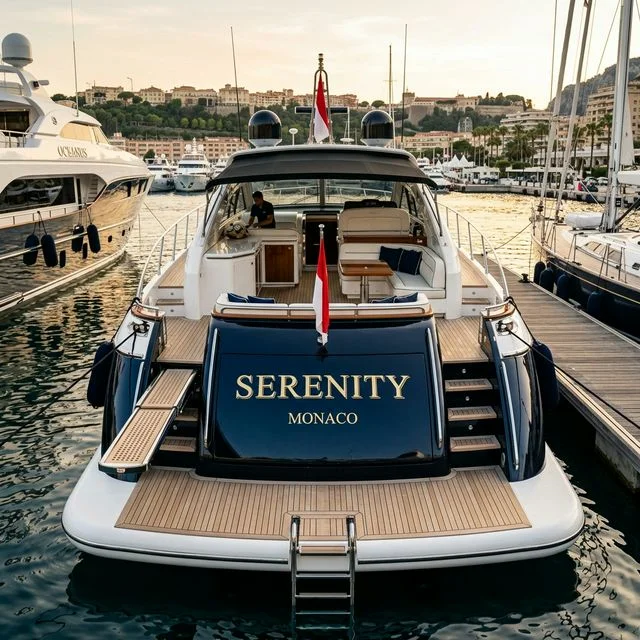
Understanding the relationship between federal documentation and state registration is essential. The two systems serve different purposes and, in many cases, boat owners may need both.
State registration grants permission to operate a vessel on the state's waters, assigns state registration numbers for state-numbered vessels, and generates revenue for state boating programs. USCG documentation establishes vessel nationality, creates a federal ownership record, and enables preferred ship mortgages. Documented vessels generally do not display state bow numbers, but many states still require a registration record, validation decal, or payment of applicable taxes and fees. For a deeper comparison, see our boat title vs. registration guide.
In practical terms, if your boat meets the five-net-ton eligibility threshold, you may be able to document it with the USCG and still comply with state registration, decal, or tax rules. If your boat does not meet the federal eligibility threshold, state registration is the normal path.
Which States Require Registration for Documented Vessels?
State treatment of documented vessels varies. Some states require a registration record and validation decals, some focus on tax compliance, and others exempt documented vessels from ordinary state numbering. Always check your state's specific rules to understand your obligations before removing numbers or assuming decals are not required.
Renewing Your USCG Documentation
Your Certificate of Documentation must be renewed on schedule. Recreational owners can use annual renewal or multi-year renewal options. Use the current NVDC renewal instructions and payment route before filing; avoid unofficial renewal notices or private solicitations that look like government forms.
Allowing your documentation to lapse can cause complications. The current NVDC fee schedule lists a $5 late renewal fee in addition to the regular renewal charge. If the vessel is no longer in documented status, you may need to use the current reinstatement or return-to-documentation process before relying on the COD for federal documentation purposes. Commercial or trade endorsements can be especially sensitive to a lapse, so check NVDC instructions before operating in a documented-vessel capacity.
For more on renewal processes generally, see our boat registration renewal guide.
Common Mistakes to Avoid
Several common mistakes can cause delays or complications in the documentation process. Avoid these to ensure a smooth experience:
Not verifying net tonnage before applying — many boats under 25 feet do not meet the five-net-ton threshold and are ineligible. Filing incomplete ownership chain documentation, which causes NVDC to reject the application. Failing to record a change of address with the NVDC, which prevents receipt of renewal notices. Assuming documentation replaces state registration entirely — many states still require registration records, decals, tax paperwork, or state fees. Using an outdated vessel name without filing the proper name change paperwork.
Frequently Asked Questions
What is the minimum boat size for USCG documentation?
How much does USCG documentation cost?
Does USCG documentation replace state registration?
Can I document my boat if I am not a US citizen?
How long does the USCG documentation process take?
What happens if my documentation expires?
How do I transfer documentation when selling a documented vessel?
Sources
- U.S. Coast Guard — National Vessel Documentation Center (https://www.dco.uscg.mil/nvdc/)
- U.S. Coast Guard NVDC — Fees Document, September 2025 (https://www.dco.uscg.mil/Portals/9/DCO%20Documents/NVDC/Instructions/NVDCINST%2016700.1H%20Fees%20Document%20-%2009-2025.pdf)
- Code of Federal Regulations — 46 CFR Part 67: Documentation of Vessels
- NASBLA — National Association of State Boating Law Administrators (https://www.nasbla.org/)
This information is provided for reference purposes only. While we strive to keep data accurate and up-to-date, registration requirements, fees, and regulations may change without notice. Always contact your state's official registration agency for the most current and authoritative information before making any decisions.