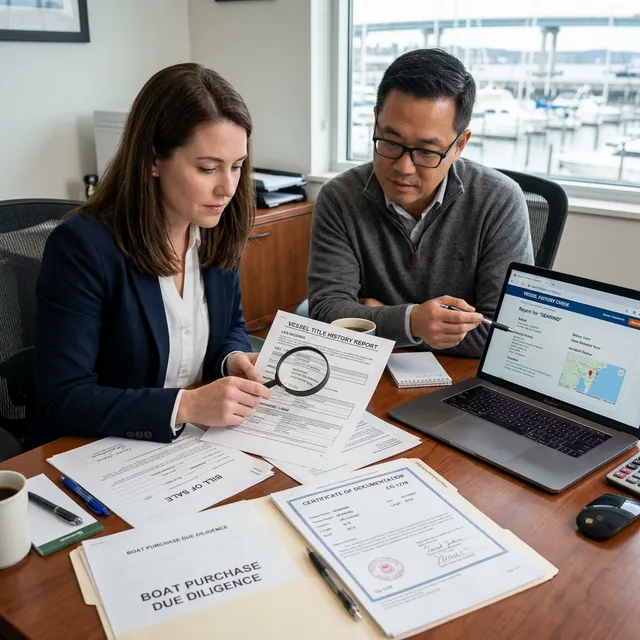
What Is a Lien on a Boat?
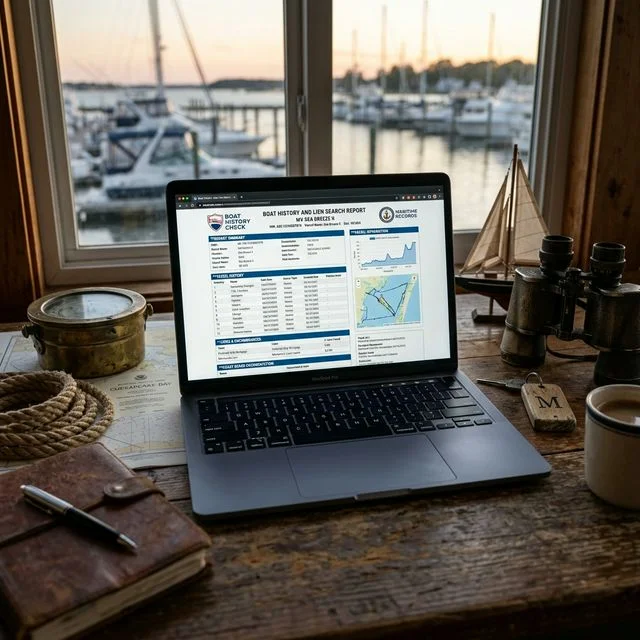
A lien is a legal claim that can affect a vessel, typically held by a lender, repair facility, marina, tax authority, or another creditor. When a valid lien is attached to a boat, the lienholder may be able to block a clean title transfer, demand payoff, or enforce the claim against the vessel.
For boat buyers, liens are one of the most important risks in a used boat purchase. If you buy a boat with an existing lien, you may not personally owe the seller's debt, but the lien can still prevent clean registration or put the vessel at risk if the lienholder enforces its rights. Conducting a lien check before completing any boat purchase protects your ownership path.
| Boat situation | First lien check | Do not close until |
|---|---|---|
| USCG documented vessel | NVDC vessel search and Abstract of Title request | Recorded mortgage/lien status is understood and releases are documented |
| State-titled vessel | Physical title plus state title/registration agency check | All listed lienholders have signed releases or the payoff is handled at closing |
| Registration-only vessel | Prior registration, bill of sale chain, state agency, and UCC search where appropriate | The seller can show a credible ownership chain |
| Boat with recent repairs or storage | Ask for paid invoices from marina, yard, or repair shop | Unpaid storage or repair claims are resolved in writing |
| High-value private sale | Professional documentation/title search | Search results match the HIN, owner name, and closing documents |
Unlike real estate, where title searches are a standard part of every transaction, boat purchase customs vary. Many private boat sales happen without any lien verification at all, leaving buyers exposed to significant financial risk. This guide explains how to check for liens and protect yourself.
Why You Must Check for Liens Before Buying
A lien can follow the vessel even after a private sale. This is the key risk for buyers: if the previous owner had a marine loan against the boat and sold it without paying off that loan, the lender's claim may remain attached to the boat. Depending on the lien and jurisdiction, the lienholder may be able to block transfer or enforce against the vessel even though you paid the seller in good faith.
Common scenarios where liens cause problems for buyers include: the seller still owes money on a boat loan (the most common situation), a marina has filed a lien for unpaid storage or repair fees, a boat repair shop has placed a mechanic's lien for unpaid work, the IRS or state tax authority has placed a tax lien against the seller's assets (which may include the boat), and the seller has outstanding child support or other court judgments that resulted in liens.
Sellers should disclose liens and provide a clear transfer path, but not every private-sale listing is accurate. A proactive lien search protects you from relying solely on the seller's representations.
Method 1: USCG Abstract of Title (Federal)
For vessels that are or have ever been documented with the US Coast Guard, the NVDC (National Vessel Documentation Center) maintains an Abstract of Title that shows the complete ownership and encumbrance history of the vessel. This includes all recorded Preferred Ship Mortgages, which are federally recorded liens.
You can request an Abstract of Title from the NVDC using the vessel's official number or other identifying information required by the request process. A public vessel search can help confirm basic documentation details, while a certified abstract is a formal paid request.
This method is important for federally documented vessels but does not replace state title checks, mechanic's lien checks, tax questions, or seller due diligence. Use it as one layer of a comprehensive search, not as the sole verification. For more about USCG documentation, see our USCG documentation guide.
Method 2: State DMV or Title Search
In states that require boat titles, the title itself serves as the primary ownership document and records any liens. A clear title — one with no liens listed — is the gold standard for verifying that a boat is free of encumbrances.
To conduct a state-level check, you can: examine the seller's physical title document (liens will be listed on the front of the title), contact the state DMV, DNR, or title issuing agency to verify the title status using the HIN, or request a duplicate title if the seller cannot produce the original.
In states that do not require boat titles, liens may be recorded at the county level or may not be centrally recorded at all, making verification more difficult. In those states, a professional lien search service becomes especially important. For a complete list of title requirements, use our title requirements checker.
Method 3: HIN Verification
Every boat manufactured after 1972 is required by federal law to have a Hull Identification Number (HIN) — a 12-character alphanumeric code permanently affixed to the transom. The HIN is analogous to a VIN (Vehicle Identification Number) on a car and is the key identifier used in all lien and title searches.
Before purchasing a used boat, physically verify the HIN on the vessel matches the HIN on all documentation (title, registration, bill of sale). Check for signs of alteration, grinding, or re-stamping, which may indicate the HIN has been tampered with — a serious red flag that could mean the boat is stolen or the owner is attempting to obscure its history.
You can use the HIN to search for the boat's history through the NVDC, your state's DMV/DNR, and third-party boat history services. Multiple databases should be checked because no single database covers all lien types across all jurisdictions.
Method 4: Professional Lien Search Services
For the most comprehensive protection, consider using a professional boat lien search service. These companies search multiple databases including USCG records, state title records, UCC (Uniform Commercial Code) filings, and sometimes county-level records to provide a complete picture of any encumbrances.
A marine surveyor, documentation specialist, or title company can often help coordinate searches for higher-value transactions. Ask exactly which databases are checked, whether the report includes UCC filings, and whether the search covers the boat, trailer, and documented-vessel record if applicable.
While these services cost money, the expense may be modest compared with the potential loss from buying a boat with undisclosed liens. For higher-value used boat purchases, a professional lien search is often worth considering.
What to Do If You Find a Lien
If your lien search reveals an existing lien on a boat you want to purchase, you have several options. The best course of action depends on the amount of the lien, the seller's willingness to cooperate, and the value of the boat.
The most straightforward approach is to require the seller to satisfy (pay off) the lien before closing the sale. The lienholder will then issue a lien release, and the state or USCG will update the title to show clear ownership. This is the safest option for the buyer.
Alternatively, you can arrange an escrow transaction where the purchase proceeds are used to pay off the lien directly. The escrow agent holds the funds until the lien is satisfied and the title is cleared. This method works well when the lien amount is less than the purchase price.
If the lien amount exceeds the purchase price (the boat is "underwater"), the seller must bring additional funds to close the transaction. In this situation, buyers should proceed with extreme caution and consider whether the purchase is worth the risk and complexity.
Never accept a seller's verbal assurance that a lien has been or will be paid off. Always verify lien satisfaction through official records before transferring any money. For a complete guide on the ownership transfer process, see our boat title transfer guide.
Common Scams and Warning Signs
Boat fraud is less regulated and less publicized than auto fraud, but it is a real risk in the used boat market. Red flags that should trigger extra caution include: the seller cannot produce a title or registration, the price is significantly below market value, the seller is in a hurry to close and discourages you from doing research, the HIN appears altered or does not match documentation, the seller is not the person named on the title, and the boat is being sold in a state different from where it is registered.
If you encounter any of these warning signs, walk away or invest in a professional lien and history search before proceeding. The small cost of due diligence is far less than the potential loss from buying a boat with hidden liens, a stolen history, or title problems.
Frequently Asked Questions
Can I check for boat liens for free?
How long does a lien stay on a boat?
Can I buy a boat with a lien on it?
What is a mechanic's lien on a boat?
Is a boat history report worth buying?
What happens if I accidentally buy a boat with a lien?
Sources
- U.S. Coast Guard — National Vessel Documentation Center (https://www.dco.uscg.mil/nvdc/)
- NICB — National Insurance Crime Bureau Boat Search (https://www.nicb.org/)
- UCC — Uniform Commercial Code Filing Standards (https://www.uniformlaws.org/)
This information is provided for reference purposes only. While we strive to keep data accurate and up-to-date, registration requirements, fees, and regulations may change without notice. Always contact your state's official registration agency for the most current and authoritative information before making any decisions.