Quick answer
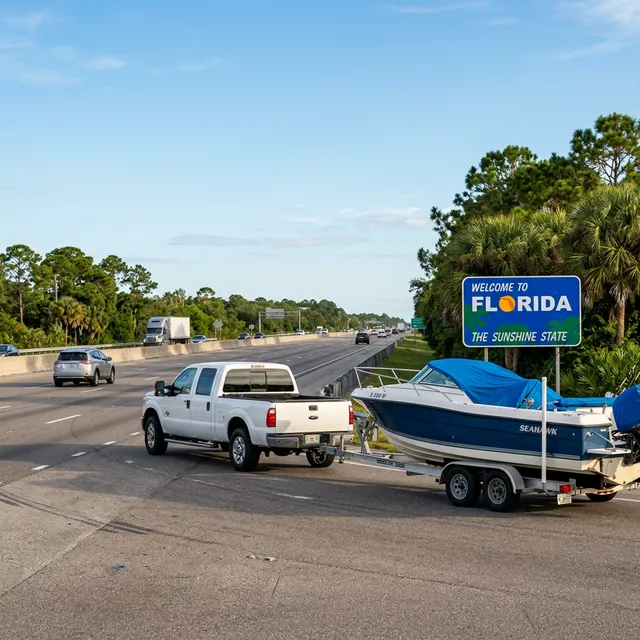
Non-residents can often use a boat with valid home-state registration for a limited temporary period before the host state requires local registration. Many states publish a 30, 60, or 90 day rule, while others use a state-specific or principal-use standard.
Temporary-use rules vary by agency. Verify final limits with the official state registration office before a long trip or seasonal stay.
Understanding Non-Resident Boat Registration Rules
States commonly recognize valid boat registrations from other states for temporary use, but reciprocity is not a blank check. Some states publish a fixed day count, some use a principal-use standard, and some apply special rules for documented vessels, boundary waters, or boats kept in the state for a season.
If you own a boat registered in one state but plan to use it in another state — whether for a vacation, seasonal use, or a temporary relocation — you need to understand that state's rules for non-resident vessel operation. Every US state has its own regulations governing how long non-residents can operate their boats before local registration is required.
The practical benefit is that you usually do not need to register your boat in every state where you might use it for a short trip. The challenge is that time limits and principal-use rules vary significantly from state to state, so a Florida or Texas rule should not be assumed in Wisconsin, Michigan, or any other host state.
Fast Check: 30, 60, 90 Days, or State-Specific?
Use this quick grouping to understand the common patterns in the current state dataset, then open the state row below before relying on a deadline.
| Pattern | Examples from current site data | What to verify |
|---|---|---|
| 30-day examples | New Hampshire | Whether the state counts consecutive days, calendar-year days, or principal use. |
| 60-day examples | Colorado, Connecticut, Delaware, Georgia, Hawaii, Idaho | Whether the state counts consecutive days, calendar-year days, or principal use. |
| 90-day examples | Alaska, Arizona, Arkansas, Florida, Illinois, Louisiana | Whether the state counts consecutive days, calendar-year days, or principal use. |
| State-specific or principal-use standard | Some states do not fit a simple day-count pattern. | Where the boat is kept, launched, principally used, or owned by a resident. |
Temporary Use Periods by State
Many states set a temporary use period — the number of consecutive days a non-resident can operate a vessel registered in another state before local registration is required. Treat the table below as a routing aid: exact rules can depend on whether the boat is visiting, stored, documented with the US Coast Guard, or principally used in the host state.
Below is a summary of common temporary use periods. For exact rules for a specific state, visit that state's registration page:
| State | Temporary Use | Notes |
|---|---|---|
| Alabama | 45 days | Non-residents with valid home state boater safety certification may operate in Alabama |
| Alaska | 90 days | Alaska does not list a general boater education card requirement, but non-residents still need to follow any age, location, guide, rental, and safety rules that apply. |
| Arizona | 90 days | Arizona does not list a general boater education card requirement, but non-residents must still follow registration, NBSIF, age, rental, AIS, and local waterway rules. |
| Arkansas | 90 days | Recognizes NASBLA-approved boater education certificates from other states |
| California | 120 days | Valid home-state registration can support temporary visitor use; confirm principal-use and Boater Card exemption rules before extended stays |
| Colorado | 60 days | Accepts boating safety certificates from other states if their laws are not less restrictive |
| Connecticut | 60 days | Recognizes valid registration and boater education from other states |
| Delaware | 60 days | Recognizes valid registration from other states for temporary use |
| Florida | 90 days | Valid home-state registration can support temporary Florida use for 90 days or less; confirm title, registration, and county filing rules before extended use |
| Georgia | 60 days | Recognizes valid registration from other states for up to 60 consecutive days |
| Hawaii | 60 days | Out-of-state vessels may remain in Hawaii waters for up to 60 calendar days before Hawaii title and registration are required, but operator education and thrill craft rules should be checked separately before operation. |
| Idaho | 60 days | Idaho does not list a statewide mandatory boater education card for ordinary operators, but renters, OUI offenders, youth/local rules, and rental-business instruction can still apply |
| Illinois | 90 days | Recognizes valid registration and boater education from other states |
| Indiana | 60 days | Valid out-of-state registration can support temporary use; operators must still follow Indiana age, education, lake permit, and local waterway rules |
| Iowa | 60 days | Non-residents exempt from IA boater education with NASBLA-approved certificate from home state |
| Kansas | 60 days | Recognizes valid out-of-state registration for up to 60 consecutive days; keep the Certificate of Number onboard and follow Kansas operator rules |
| Kentucky | 60 days | Valid out-of-state registration can support temporary use, but Kentucky primary-use, county tax, and title-transfer facts should be checked before extended stays |
| Louisiana | 90 days | Valid out-of-state registration can support temporary use; check LDWF registration, title, and tax documents before extended Louisiana use |
| Maine | 60 days | Recognizes valid out-of-state registration; non-ME boats must purchase Lake and River Protection Sticker ($59) for inland waters |
| Maryland | 60 days | Valid out-of-state registration can support temporary use; Maryland's 60-day nonresident boater-education exemption is conditional and does not replace registration/title checks |
| Massachusetts | 60 days | Non-residents should carry a valid NASBLA-approved certificate or confirm how the Hanson-Milone Act phased schedule applies before operating |
| Michigan | 60 days | Recognizes valid registration and boater education from other states |
| Minnesota | 90 days | Non-resident operator education treatment is conditional; check DNR rules for the operator age, length of stay, and home-state certificate |
| Mississippi | 60 days | Valid out-of-state registration and boater education can support temporary use, but operator age and document requirements still apply |
| Missouri | 60 days | Non-residents must comply with Missouri education requirements when applicable; NASBLA-approved home-state certificates may be accepted |
| Montana | 90 days | Non-residents with valid NASBLA-approved boating safety certificate exempt from MT boater education |
| Nebraska | 90 days | Non-residents with a NASBLA-approved boating safety certificate from another state may operate when Nebraska age and operator rules are satisfied |
| Nevada | 60 days | Non-residents born on/after Jan 1, 1983 must hold a valid boater education card from home state or NV |
| New Hampshire | 30 days | Recognizes NASBLA-approved certificates; non-NH boats must purchase aquatic invasive species decal |
| New Jersey | 180 days | Valid home-state registration can support temporary use; confirm NJ State Police certificate and non-tidal license rules before operating |
| New Mexico | 90 days | Non-residents must meet NM boater education requirements or show proof of completing a NASBLA-approved course from home state |
| New York | 90 days | Valid out-of-state registration can support temporary use; confirm NY Parks boating safety certificate reciprocity before operating |
| North Carolina | 90 days | Valid home-state registration can support temporary use; confirm NCWRC registration triggers before extended stays |
| North Dakota | 90 days | Non-resident youth (12-15) operating 10+ HP boats without adult supervision must meet ND boater education requirements |
| Ohio | 90 days | Valid home-state registration can support temporary use; confirm ODNR education and registration triggers before extended stays |
| Oklahoma | 60 days | Valid home-state registration can support temporary use; confirm Oklahoma youth operator and education rules before operating |
| Oregon | State-specific | Confirm Oregon boater education and permit requirements before operating or launching |
| Pennsylvania | 60 days | Valid home-state registration can support temporary use; launch permits and Pennsylvania education rules may still apply depending on access point and vessel |
| Rhode Island | 90 days | Valid home-state registration can support temporary use; PWC operators and boater education reciprocity should be confirmed with DEM before operating |
| South Carolina | 60 days | Recognizes valid registration and boater education from other states |
| South Dakota | 60 days | South Dakota does not list a general boater education card requirement, but youth operation and local safety rules still apply |
| Tennessee | 60 days | Non-residents born after January 1, 1989, may use any NASBLA-approved boating safety certificate |
| Texas | 90 days | Valid home-state registration can support temporary use; confirm Texas registration triggers before extended stays |
| Utah | 60 days | Non-residents exempt from UT titling requirements; must display mussel-aware course completion certificate on dashboard |
| Vermont | 90 days | Recognizes NASBLA-approved boater education from other states |
| Virginia | 90 days | Valid home-state registration and NASBLA-approved education can support temporary use; confirm DWR rules for principal-use or extended stays |
| Washington | 60 days | Non-residents can have temporary education-card exemptions or out-of-state-card recognition; confirm the Washington State Parks rule for your stay |
| West Virginia | 60 days | Valid home-state registration can support temporary use; confirm DMV/DNR requirements before extended West Virginia use |
| Wisconsin | 60 days | Valid home-state registration can support temporary use; confirm Wisconsin DNR registration and boater education rules before extended stays |
| Wyoming | State-specific | Wyoming does not list a general boater education card requirement, but age, AIS, and local operating rules still apply |
How Reciprocity Works
Reciprocity in boat registration means that states mutually recognize each other's vessel registrations. When you operate your boat in another state, the host state treats your home-state registration as valid for a limited period. This is similar to how your driver's license from one state is recognized when you drive in another state.
However, reciprocity has important limitations:
- Your home-state registration must be current and valid — expired registrations are not recognized.
- You must carry the original registration certificate (or a certified copy) on board at all times.
- Your vessel must display the registration number and validation stickers as required by your home state.
- Reciprocity covers the vessel's registration status but does not exempt you from local boating safety laws, equipment requirements, or operational rules.
When You Must Register in a New State
You are generally required to register your boat in a new state when:
- You exceed the state's temporary use period or principal-use threshold.
- You establish residency in the new state (by getting a driver's license, voting, or living there for an extended period).
- Your boat's primary location of use changes to the new state.
- You purchase a vessel in the new state and that state's registration or tax paperwork is due before continued use.
The deadline to register after establishing residency varies by state. Some deadlines are short, and others depend on where the vessel is principally used or kept. Failing to register within the applicable deadline can result in fines and back-registration fees.
Registration Transfer Process
When you need to register your boat in a new state, the process typically involves:
- Gather documents: Your current registration certificate, proof of ownership (title or bill of sale), photo ID, and proof of new residency.
- Complete the application: Fill out the new state's vessel registration application form (available online or at the registration office).
- Pay applicable fees: Registration fee based on vessel size, title fee (if applicable), and any sales or use tax owed.
- Display the required identifiers: State-registered vessels usually display the new state's bow numbers and validation stickers. Federally documented vessels may follow a different marking pattern and still need state decals or paperwork.
- Cancel old registration: Notify your previous state that you have transferred registration to avoid receiving renewal notices or being charged fees in both states.
Sales and Use Tax Considerations
One of the most significant costs when registering a boat in a new state is the potential sales or use tax liability. When you register a vessel in a state different from where you originally purchased it, you may owe that state's use tax on the vessel's current fair market value.
Many states offer a sales tax credit for taxes already paid in another state. For example, if you paid 6% sales tax when you purchased your boat in Florida and then move to Texas (6.25% sales tax), you may only owe the difference rather than the full Texas tax. However, if you move from a higher-tax state to a lower-tax state, you generally do not receive a refund for the difference.
Some states have specific time-based exemptions — for example, a state may not charge use tax on a vessel that was purchased and registered in another state more than a certain number of years ago. Tax rules are complex and vary significantly; consult your new state's tax department or a maritime attorney for specific advice.
USCG Documentation and State Registration
If your vessel is documented with the US Coast Guard, you have a federal Certificate of Documentation that serves as national ownership evidence. However, USCG documentation does not automatically replace state requirements. Documented vessels generally do not display state bow numbers, but many states still require registration, validation decals, tax filings, or proof that the vessel is not principally used there.
The advantage of USCG documentation is that it can simplify the process of operating in multiple states, as it provides universally recognized proof of ownership. For details, see our USCG Documentation Guide.
Tips for Non-Resident Boaters
- Know the rules before you go — Research the temporary use period and boating regulations of any state where you plan to use your boat.
- Keep documentation accessible — Carry your registration certificate, proof of insurance, and ID at all times on the water.
- Check safety equipment requirements — Different states may have different requirements for life jackets, fire extinguishers, and signaling devices.
- Verify boater education — Some states require all vessel operators to have a boater education certificate, even non-residents.
- Consider seasonal registration — If you use your boat in another state seasonally but less than the temporary use limit, you may not need to register locally.
- Track your days — Some states count "consecutive days" while others count "total days within a calendar year." Keep a log of when your vessel enters and leaves state waters.