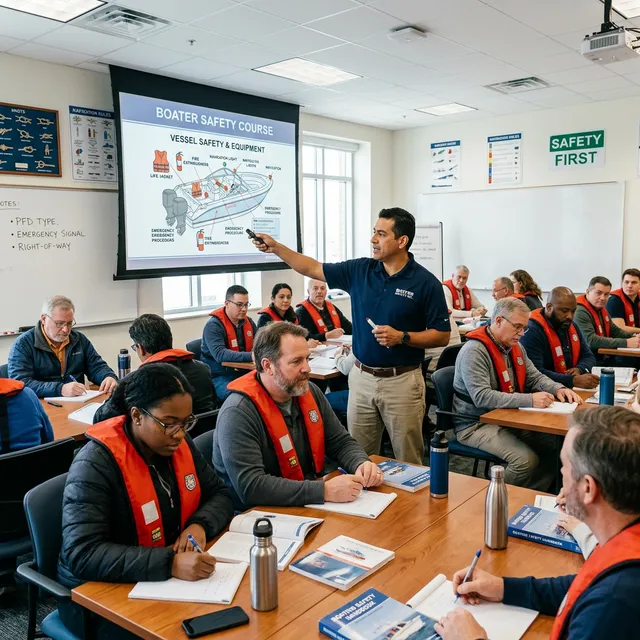
Why Boater Education Matters
Boating safety education teaches navigation rules, required equipment, emergency response, alcohol and drug rules, and state-specific operating limits. It is also a legal gatekeeper in many states for motorboats, personal watercraft, younger operators, or operators born after a specified date.
Before you operate, answer three questions: what state waters you will use, what vessel you will operate, and whether your age or birth date triggers a course requirement. The registration office may issue vessel credentials, but the education card is a separate operator requirement.
| Question | Why it matters |
|---|---|
| Is the boat motorized or a PWC? | Most education mandates focus on motorboats and personal watercraft, not every paddle craft. |
| How old is the operator? | Some states use age limits for minors or younger adults. |
| What is the operator's birth date? | Some states use phased birth-date rules instead of a single age cutoff. |
| Is the course state-approved? | NASBLA approval helps, but the state agency decides what it accepts. |
| Will you boat out of state? | Reciprocity varies, so visitors should verify acceptance before operating. |
Failing to meet your state's requirements can result in citations, fines, or limits on your ability to operate legally on public waterways.
Whether you are a first-time boat owner or an experienced captain, understanding your state's boater education requirements is an essential part of the boat registration process.
Types of State Education Requirements
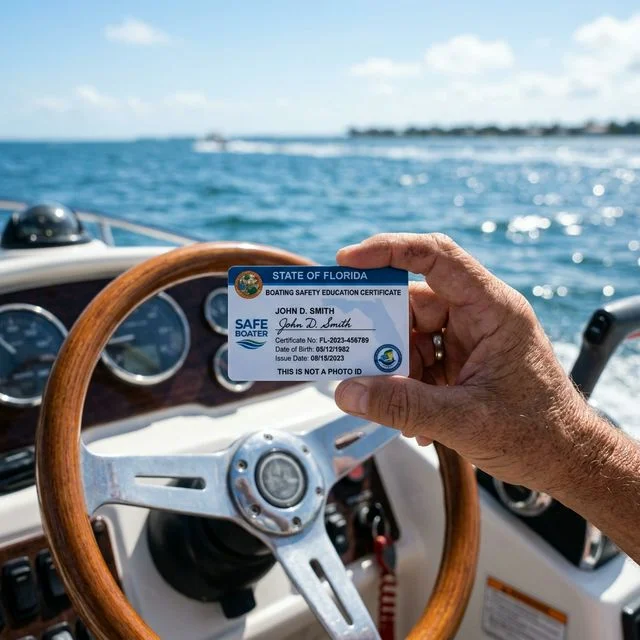
States vary significantly in how they structure boater education mandates. Requirements generally fall into four categories, each with different implications for who must complete a safety course.
Category 1: Mandatory for All Operators
The broadest approach requires nearly all operators in a covered vessel category to complete an approved boater safety course. California is a useful example: its phased California Boater Card program now applies broadly to operators of covered motorized vessels. Even in broad-requirement states, check the horsepower threshold, rental rules, and visitor rules before assuming every vessel and operator is covered.
Category 2: Mandatory Based on Birth Date
Several states apply education requirements based on the operator's birth date. Florida is a well-known example: operators born on or after January 1, 1988 must meet the state's boating safety education requirement to operate a motorized vessel of 10 horsepower or more. Texas uses a different birth-date cutoff, so do not copy one state's date into another state.
Category 3: Mandatory Based on Age
Some states require boater education only for operators below a certain age, or they combine age limits with supervision rules. For example, a state may allow a younger operator only after completing a course, only with an adult on board, or only for certain vessel types. Read the state rule for the exact age band and supervision language.
Category 4: No Mandatory Requirement
A few states still do not have a blanket boater education requirement for every operator, though age-based, PWC, rental, or local rules can still apply. Even where no statewide mandate applies to you, completing a voluntary safety course may help with insurance, rental approval, and safer operation.
What Does a Boater Safety Course Cover?
Approved boater safety courses follow a curriculum standard set by the National Association of State Boating Law Administrators (NASBLA). A typical course covers the following topics in 6 to 8 hours of instruction:
Navigation rules and right-of-way on the water. Required safety equipment including life jackets (PFDs), fire extinguishers, visual distress signals, and sound-producing devices. Safe boating practices including speed management, weather awareness, and passenger safety. State-specific boating laws and regulations. Alcohol and drug awareness while boating. Trailering and launching procedures. Emergency procedures including man-overboard recovery, capsizing, and calling for help. Environmental responsibility and clean boating practices.
Upon successful completion, participants receive a boating safety education certificate (sometimes called a boating license or boater card) that is valid for life in most states. Some states require a separate state-specific exam after completing the general course.
NASBLA-Approved Courses
The National Association of State Boating Law Administrators (NASBLA) sets a widely used standard for boater education nationwide. A NASBLA-approved course can satisfy many state education rules, but the state agency still decides which courses, tests, and cards it accepts.
Course providers, formats, and fees change. When selecting a course, use your state agency's approved-course list or verify that the provider is accepted for your state. NASBLA approval is important, but some states add state-specific tests, cards, or submission steps.
Online vs. In-Person Courses
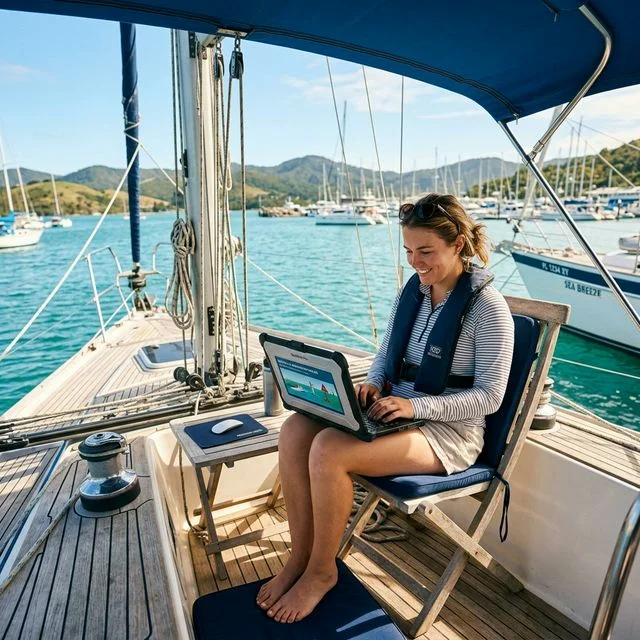
Boater safety courses are available in both online and in-person (classroom) formats. Each has advantages depending on your learning style and schedule.
Online courses offer flexibility to study at your own pace, complete sections over multiple sessions, and take the final exam when you feel ready. Cost, minimum study time, and card-issuance steps vary by state and provider.
In-person courses, often offered by state wildlife agencies, the US Coast Guard Auxiliary, or boating education organizations, provide live instruction and the opportunity to ask questions in real time. Availability varies by location and season. Weekend courses and evening multi-session formats are common.
State-by-State Comparison of Key Requirements
Requirements vary widely across the country, and specific rules can change from year to year. Here is a summary of key patterns across the 50 states. For the most current details for your state, visit your state's registration page which includes specific education requirements.
Common patterns include broad card requirements for covered motorized vessels, birth-date cutoffs, under-age operator rules, PWC-specific rules, and no blanket mandate for adults. Because these patterns can overlap, always check the vessel type, horsepower, operator age, rental status, and visitor rule.
Regardless of your state's rule, completing an approved safety course before operating a vessel is a practical safety step and can simplify questions when you boat in another state.
Recent Changes and Trends (2024-2026)
The boater education landscape continues to evolve. California completed its phased California Boater Card schedule on January 1, 2025, so operators should confirm whether their motorized vessel falls under the current card requirement before boating there.
Florida and Texas remain examples of birth-date-based rules, but their dates and vessel thresholds differ. Treat each state as its own rule set rather than assuming a national cutoff.
States also update PWC, rental, visitor, and supervision rules. Recheck the official state boating agency before relying on an older card, an out-of-state course, or a provider's marketing page.
Exemptions and Reciprocity
Many states offer exemptions from boater education for specific groups. Common examples can include US Coast Guard licensed captains, operators with approved prior training, supervised minors, rental operators after required instruction, or short-term visitors with accepted out-of-state credentials.
Boater education reciprocity varies by state. Many states recognize NASBLA-approved certificates from other states, but acceptance is not automatic in every situation. Before operating in a new state, verify whether your existing certificate is accepted by the state agency responsible for boating safety.
Frequently Asked Questions
Is a boating safety course the same as a boating license?
How much does a boater safety course cost?
Does the boater education certificate expire?
Can I use an out-of-state boating certificate?
What happens if I am caught without a boating certificate in a mandatory state?
Are there any benefits to taking a course even if my state does not require one?
How long does a boater safety course take?
Sources
- NASBLA — National Association of State Boating Law Administrators (https://www.nasbla.org/)
- U.S. Coast Guard — 2024 Recreational Boating Statistics (https://uscgboating.org/statistics/)
- BoatUS Foundation — Boating Safety Courses (https://www.boatus.org/)
This information is provided for reference purposes only. While we strive to keep data accurate and up-to-date, registration requirements, fees, and regulations may change without notice. Always contact your state's official registration agency for the most current and authoritative information before making any decisions.